

Table of Contents
- Why Hair Extensions Tangle and Mat
- How to Brush Hair Extensions Without Damage
- How to Wash Hair Extensions Correctly
- How to Detangle Hair Extensions Gently
- How to Sleep With Hair Extensions to Prevent Tangles
- Maintain Moisture and Softness to Keep Hair Extensions Tangle Free
- Choosing High-Quality Extensions That Resist Tangling
- Troubleshoot Persistent Tangling and Matting
- Frequently Asked Questions
Last Updated: October 7, 2026
Why Hair Extensions Tangle and Mat
Hair extensions tangle because they lack the natural oils and protective scalp environment that keeps your own hair healthy. When strands rub together without moisture or protection, they catch and knot, worse with synthetic or low-quality human hair that has damaged cuticles.
The right care transforms extension longevity. Tangles form faster when hair is dry, when you use rough brushes, or when extensions rub against friction during sleep or exercise.
Several factors accelerate matting:
- Dry hair loses slip, Moisture keeps the hair shaft smooth and slippery. Without it, strands grip each other.
- Low-quality hair has raised cuticles, If the cuticle layer is damaged, strands snag on each other instantly.
- Friction from tight hairstyles, Pulling hair too tight creates tension that causes knotting at the roots and ends.
- Product buildup, Silicones and heavy products coat the hair and create sticky spots where tangles start.
How to Brush Hair Extensions Without Damage
Brushing is the fastest way to create tangles if you use the wrong technique. Most people brush from roots to ends, pushing knots down the shaft.
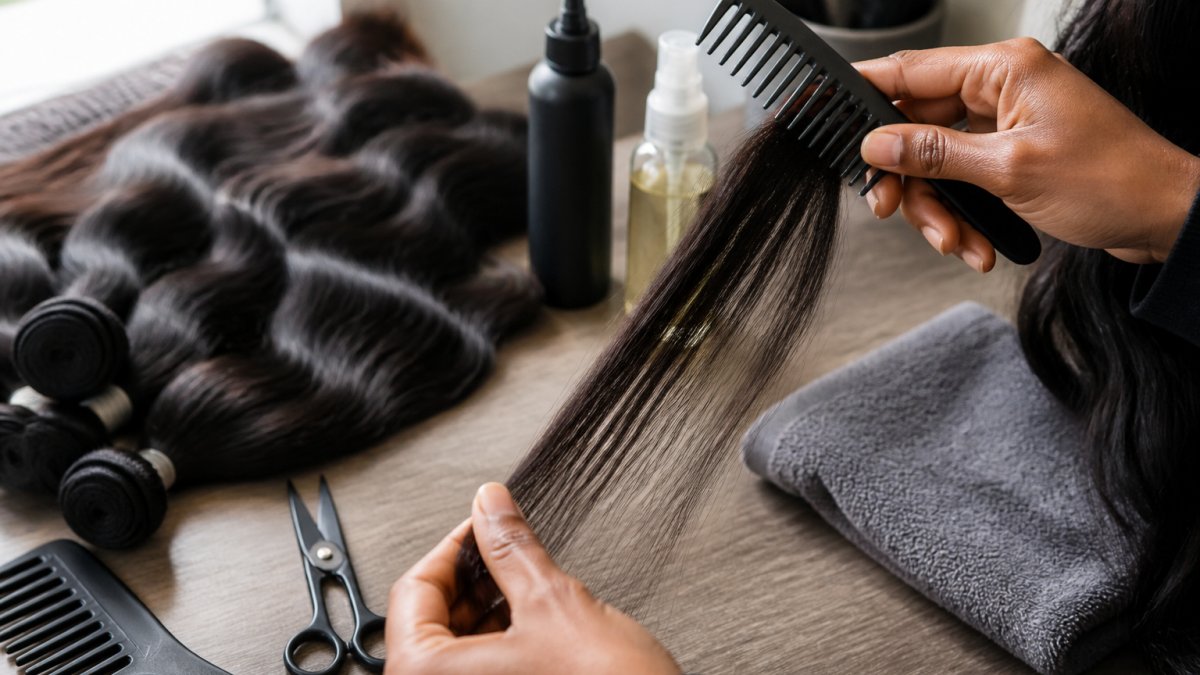
Choose the Right Tools
Your brush makes or breaks extension care. A regular paddle brush or fine-tooth comb will shred human hair extensions. You need tools designed for delicate strands.
The best tools for extensions are:
- Wide-tooth comb, Glides through tangles without catching. Use this for detangling wet hair.
- Extension brush, Specifically designed with softer bristles that don't pull. Ideal for dry brushing.
- Detangling brush, Has flexible bristles that separate strands gently without breakage.
Avoid metal combs, fine-tooth brushes, and anything with tightly packed bristles. These tear the hair cuticle and cause more tangling over time.
Brush in Sections From Ends to Roots
Sectioning your hair makes brushing faster and more thorough, catching tangles before they spread.
Here's the step-by-step process:
- Divide hair into 4-6 sections, Use clips to separate your hair so you work on one area at a time.
- Start at the very ends, Hold a small section of hair and gently comb the bottom 2-3 inches first.
- Work upward slowly, Move the comb up 1-2 inches and repeat. Never rush this step.
- Use short, gentle strokes, Don't pull or force the comb through knots. Let the comb glide.
- Finish at the roots, Once the rest is smooth, gently brush from roots to ends to polish the section.
- Unclip and repeat, Move to the next section and repeat the same pattern.
This takes longer than regular brushing but prevents the damage that causes future tangles. Brush extensions 2-3 times per week when dry, and always before washing.
How to Wash Hair Extensions Correctly
Washing is when extensions are most vulnerable. Water softens the hair shaft, and friction can cause massive tangling. The goal is to clean without agitation.
Wash Frequency and Water Temperature
How often you wash depends on your lifestyle and product use.
Most people should wash extensions every 7-10 days. If you exercise heavily or use lots of styling products, wash every 5-7 days.
Use lukewarm water, not hot. Hot water opens the hair cuticle and causes frizz and tangling. Lukewarm water cleans effectively while keeping the cuticle closed and smooth.
Step-by-Step Washing Process
Washing extensions requires a different approach than washing your own hair: you're gently cleansing the hair shaft, not massaging the scalp or scrubbing.
Follow this process:
- Brush before washing, Remove all tangles while hair is dry. Wet tangles are much harder to fix.
- Rinse with lukewarm water, Let water flow downward through the hair. Don't let water spray upward at the roots.
- Apply sulfate-free shampoo, Use a gentle, sulfate-free formula. Regular shampoo strips moisture and causes dryness.
- Wash in one direction only, Squeeze shampoo through the hair from top to bottom. Never rub or scrub.
- Rinse thoroughly, Keep rinsing until water runs completely clear. Product buildup causes tangling.
- Apply conditioner, Focus on mid-lengths and ends. Avoid the roots if you have wefts or clips.
- Rinse again with cool water, Cool water seals the cuticle and adds shine. This step prevents frizz.
- Gently squeeze out excess water, Don't wring or twist. Let water drip out naturally.
Washing takes 10-15 minutes done properly, and it's worth it because clean, conditioned hair resists tangling.
How to Detangle Hair Extensions Gently
Even with perfect prevention, tangles happen. Your removal technique determines whether your extensions survive or break.
Detangle Before and After Washing
Detangle dry hair before every wash, wet tangles are harder to fix and cause more breakage.
After washing, detangle again while hair is damp. Left-in conditioner provides slip, making knots easier to work through. Use a wide-tooth comb and the same end-to-roots technique.
Never brush extensions when they're soaking wet. Wait until they're damp but not dripping.
Use Leave-In Conditioner for Extra Slip
Leave-in conditioner is your secret weapon for stubborn tangles, providing slip that makes combing easier and protects the hair as you work through knots.
The Fula Leave-in Conditioner is formulated with coconut oil and vitamin E to detangle while strengthening.
For severe tangles, apply extra conditioner and let it sit for 10-15 minutes. The longer the conditioner sits, the easier the tangles release.
How to Sleep With Hair Extensions to Prevent Tangles
Sleep is when most tangling happens, eight hours of friction against your pillow can undo a week of careful care. Protect your hair at night.
Protective Nighttime Styles
How you wear your hair to bed determines whether you wake up to tangles or smooth strands.
The best nighttime styles are:
The Fula Leave-in Conditioner →
- Loose braid, Braid your hair loosely before bed. This keeps strands from rubbing against each other and your pillow.
- Low ponytail, Use a soft scrunchie to gather hair gently at the nape of your neck. Never use tight elastic.
- Loose bun, Twist hair into a relaxed bun on top of your head. Secure with bobby pins, not a tight elastic.
Avoid sleeping with hair down. Even if you toss and turn minimally, the friction will cause tangles by morning.
Use a Silk or Satin Pillowcase
A silk or satin pillowcase is one of the best investments for extension care.
Sleep on silk or satin every night. The difference is noticeable within a week, smoother, shinier hair free of sleep-induced tangles.
If a silk pillowcase isn't in your budget, wrap your hair loosely in a silk scarf before bed.
Maintain Moisture and Softness to Keep Hair Extensions Tangle Free
Dry hair tangles. Moist, soft hair stays smooth. The key to keep hair extensions tangle free is maintaining hydration throughout the week.
Conditioning Between Washes
You don't need to wash extensions to condition them, conditioning between washes keeps hair hydrated without the stress of washing.
Use a leave-in conditioner 2-3 times per week on damp hair. Apply it to the mid-lengths and ends, focusing on any dry spots. Let it air dry or blow dry on low heat.

Avoid Heat and High-Friction Activities
Blow dryers and flat irons damage the cuticle and cause dryness.
High-friction activities like exercise, swimming, and wind cause tangling. Before any of these, braid your hair or use a protective style.
Tight hairstyles also cause tangling at the roots. Avoid tight braids, tight ponytails, and clip-in extensions that pull on the hair.
Choosing High-Quality Extensions That Resist Tangling
Not all extensions are created equal. Hair quality determines how much tangling you'll deal with: low-quality hair tangles no matter what, while high-quality hair stays smooth with basic care.
Human Hair vs. Synthetic Hair
Human hair is always the better choice for tangle resistance. It behaves like your own hair, responds to conditioning, and can be styled with heat.
Fula Beauty Collection offers 100% human hair bundles designed to stay tangle-free. Our double-drawn wefted bundles include the Water Curly Wefted Bundle, Deep Wave Wefted Bundle, and Natural Wave Wefted Bundle.
Double Drawn and Weft Quality
Double-drawn hair has strands of similar length throughout, preventing thin spots and uneven texture.
Weft quality matters too. A well-constructed weft keeps hair secure during washing and styling.
When choosing extensions, look for double-drawn human hair with secure, tight wefts. This foundation makes all the difference in long-term tangle resistance.
Troubleshoot Persistent Tangling and Matting
Sometimes tangles return despite good care. This usually means poor hair quality, a missed step in your routine, or exposure to conditions that cause rapid tangling.
When Tangles Return Despite Good Care
If you're following the full routine and still getting tangles, check these factors:
- Are you using sulfate-free products? Sulfates strip moisture and cause dryness. Switch to sulfate-free shampoo and conditioner.
- Are you brushing from ends to roots? Brushing from roots to ends pushes knots down the hair shaft. Always start at the ends.
- Are you sleeping on a silk pillowcase? Cotton causes friction. Upgrade to silk or satin.
- Is your hair fully dry before brushing? Wet hair breaks easily. Wait until hair is completely dry.
- Are you using a leave-in conditioner? This provides slip that prevents tangles. Add it to your routine if you're not using it.
If you've checked all these and tangles still persist, the issue may be the hair quality itself. Low-grade human hair or synthetic blends tangle easily no matter what you do. Switching to premium human hair like Fula Beauty Collection's bundles solves the problem.
Special Care for Swimming, Exercise, and Travel
These activities expose your hair to conditions that cause rapid tangling.
Before exercise, braid loosely or use a low ponytail, sweat and friction create tangles quickly.
When traveling, pack a silk scarf, leave-in conditioner, and a wide-tooth comb.
Keeping hair extensions tangle-free comes down to three things: moisture, protection, and gentle handling.
Frequently Asked Questions
How do you keep hair extensions from tangling?
Keep hair extensions tangle free by brushing gently from ends to roots using a wide-tooth comb, washing with sulfate-free products, conditioning regularly, and protecting them during sleep with a silk pillowcase or loose braid. Moisture is essential, dry extensions tangle more easily. Use a leave-in conditioner like The Fula Leave-In Conditioner to maintain softness and detangle before matting occurs. Avoid tight hairstyles and high-friction activities that cause friction and breakage.
Why do my hair extensions keep getting tangled even with good care?
Persistent tangling often signals dryness, product buildup, or friction from tight hairstyles and rough handling. Check your wash frequency, washing too often strips natural oils, while infrequent washing allows buildup. Ensure you're using a wide-tooth comb and detangling from ends to roots, never from roots down. If you swim or exercise regularly, rinse extensions immediately afterward with fresh water. Low-quality synthetic hair tangles faster than human hair; upgrading to 100% human hair bundles like Fula's wefted options significantly reduces matting.
How often should you brush hair extensions?
Brush hair extensions daily, but gently and only when needed. Start with a wide-tooth comb to remove tangles before they become mats. On wash days, detangle before and after washing. Between washes, a quick daily brush keeps flyaways and minor tangles from developing into stubborn knots. Avoid over-brushing, which causes breakage. If your extensions are properly moisturized and protected during sleep, daily brushing should take just a few minutes and prevent most tangling issues.
What is the best way to wash hair extensions so they do not tangle?
Wash hair extensions in cool or lukewarm water using sulfate-free shampoo and conditioner. Detangle gently before washing, then apply shampoo in downward motions without rubbing or twisting. Rinse thoroughly, apply conditioner from mid-lengths to ends, and rinse again. Air-dry fully before styling, wet or damp extensions are fragile and tangle more easily. Wash every 7-10 days for regular wear; more frequent washing if you exercise, swim, or spend time in humid environments. Use a leave-in conditioner between washes to maintain slip and softness.